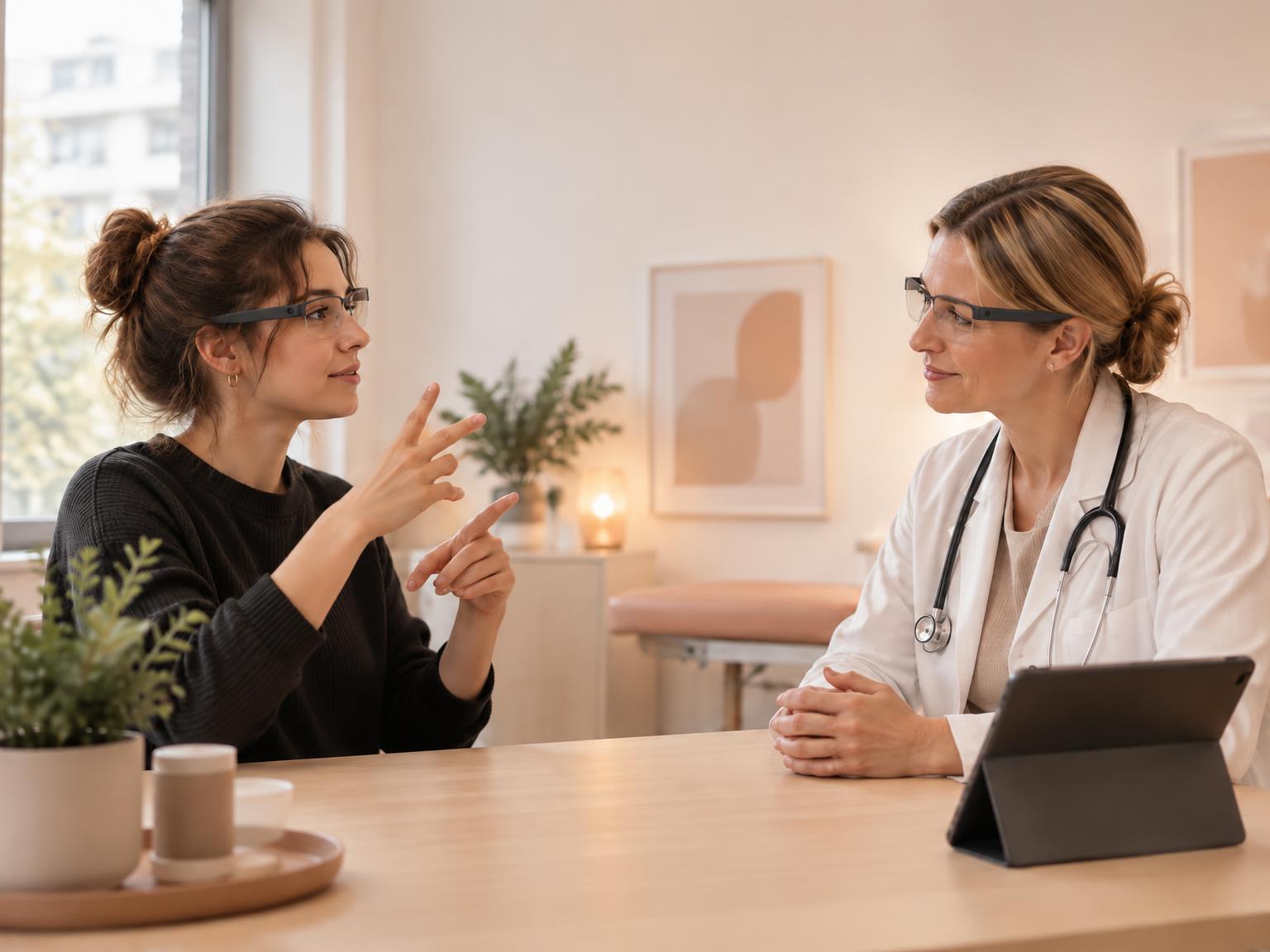
Consultation · General practice
„Ich habe seit drei Tagen Kopfschmerzen.“
„Wie stark sind die Schmerzen auf einer Skala von 1 bis 10?“
- GDPR-compliant
- Privacy-by-design
- Built natively for DGS
Healthcare shouldn't depend on interpreter availability.
More than 200,000 people use DGS in Germany, yet only around 750–800 qualified interpreters work nationwide. Scheduling difficulties, communication barriers and privacy concerns can prevent Deaf patients from receiving timely care.
Tap to compare
interpreter per DGS users
Roughly 1 interpreter for every 250+ DGS users.
Every appointment waits for one of a few hundred interpreters — often for weeks, at €93/h (§9 JVEG).
Sources: Statista, German Medical Association (Bundesärztekammer), Deutscher Gehörlosen-Bund.
One system. Both directions. More accessible communication.
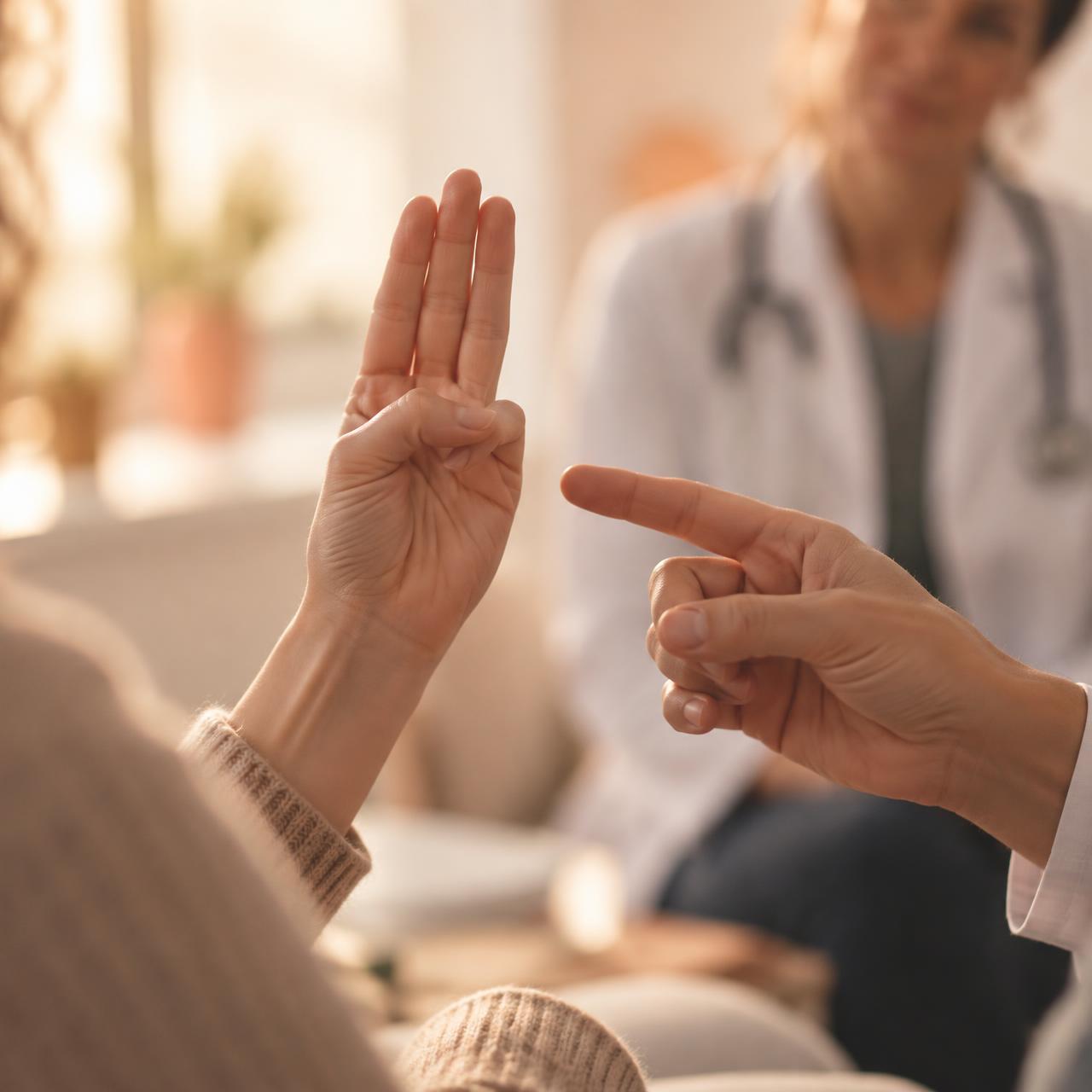
Our technology is designed to translate between DGS and spoken German, combining computer vision, sign language recognition, speech recognition and natural language processing.
- 01Camera captures DGS
- 02AI recognises signs
- 03German text for the clinician
- 01Speech recognition
- 02Medical vocabulary processing
- 03Readable captions for the patient
GDPR-compliant · privacy-by-design · built natively for DGS, not adapted from ASL
Explore how it worksBuilding trust before automation.
We are taking a phased approach: starting with interpreter-on-demand, progressing towards hybrid AI and human interpretation, and ultimately enabling bidirectional AI translation.
- Now
Interpreter on demand
Qualified human interpreters via video — bookable on short notice, medical-context ready.
- Next
Hybrid AI + human
AI captions for routine segments, human fallback for complex or sensitive moments.
- Later
Full bidirectional AI translation
Real-time DGS ↔ German, with optional human fallback.
Make your clinic accessible to more patients.
Improve scheduling flexibility, reduce communication barriers and create a more accessible patient experience.

Reach underserved patients
200,000+ DGS users — a tight-knit community where one accessible clinic travels by word of mouth.
Reduce scheduling friction
See Deaf patients when medically indicated, not weeks later when an interpreter is free.
Support better communication
Clearer anamnesis, cleaner informed consent, fewer repeat visits caused by misunderstanding.
Become a recognised Deaf-accessible clinic
Visible positioning with Deaf associations, aligned with §6 BGG accessibility expectations.
Let's make healthcare more accessible for all.
Join us in building a healthcare system where communication barriers don't determine access to care.